
AI Summary
Petrol prices sometimes increase before the fuel even reaches South Africa. Here's why global oil markets affect what you eventually pay at the pump.
Ever noticed petrol prices going up before anything has actually happened?
You hear on the news that tensions are rising somewhere thousands of kilometres away, and a week later everyone is talking about another fuel price increase.
But the strange part is this:
The petrol that is already sitting in a service station in Germiston or Bushbuckridge hasn't changed.
So why does the price change before new fuel even arrives?
The price isn't based on today's petrol
Petrol prices are based largely on what the next shipment of crude oil is expected to cost.
Oil is traded globally every day. Traders don't simply buy today's oil—they constantly estimate what oil will cost tomorrow, next week and next month.
If they believe supply might become more difficult, prices usually increase almost immediately.
That's why uncertainty alone can influence what South Africans eventually pay.
Your fuel travels a very long journey
The fuel in your car has travelled much further than most people realise.
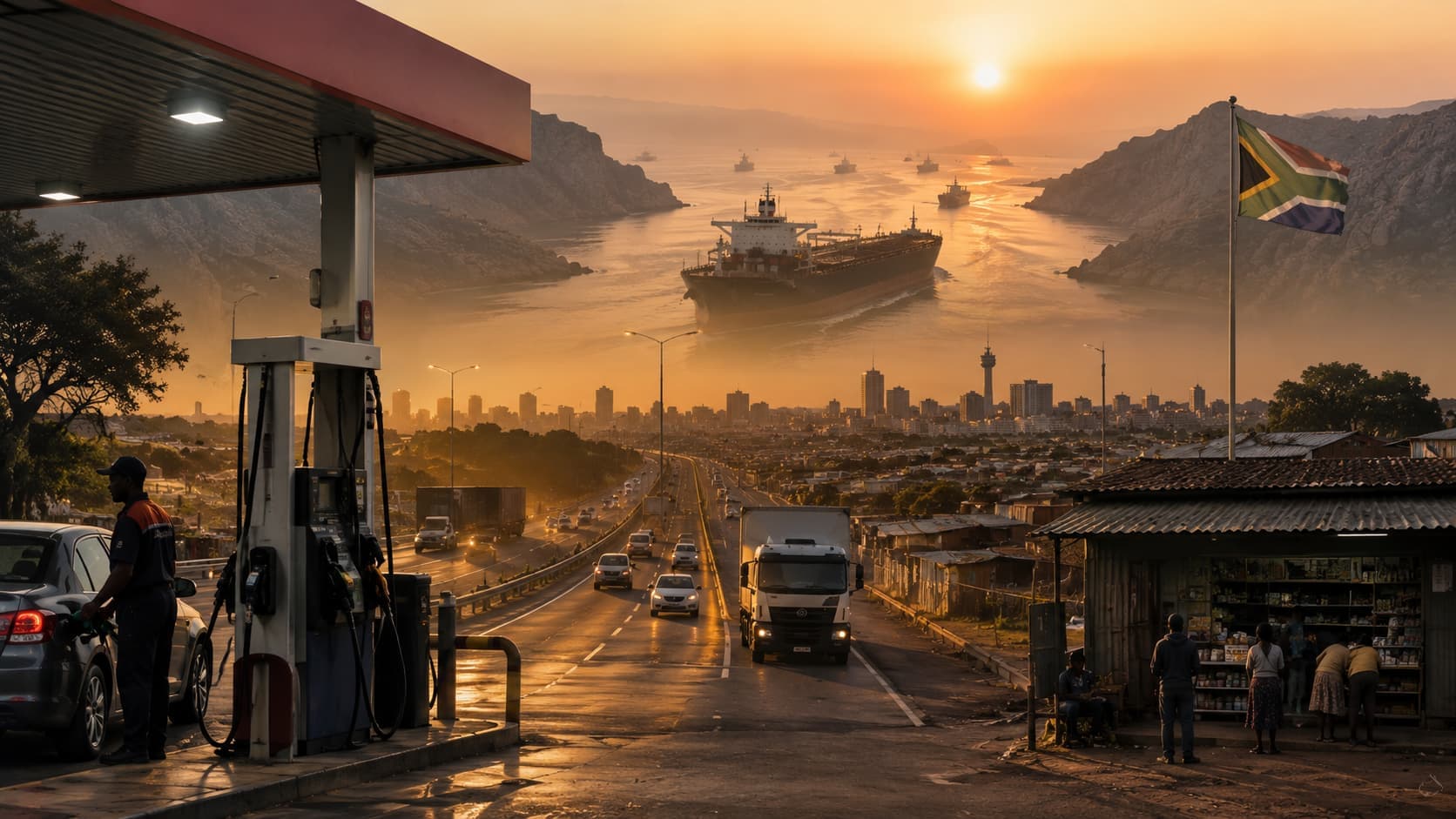
Crude oil is produced in one country, transported by massive tankers, refined into petrol or diesel, shipped again, imported into South Africa and finally delivered by road tankers to filling stations.
Whether you're filling up along the N3, in Johannesburg, Durban, or a small town like Thulamahashe in Bushbuckridge, that fuel has travelled thousands of kilometres before reaching your vehicle.
Every part of that journey costs money.
Fear can move markets faster than ships
Here's something surprising.
Oil prices often move long before ships do.
If traders believe an important shipping route could become risky, they begin paying more immediately because future deliveries may become more expensive.
It's similar to hearing that heavy rain might close the road tomorrow. Delivery companies don't wait for the road to close—they start preparing today.
The same thing happens in global oil markets.
Why this affects everyday South Africans
Higher fuel prices don't only affect motorists.
They increase transport costs for almost everything.
Food delivered to your local supermarket.
Stock arriving at a spaza shop.
Courier deliveries.
Taxi operating costs.
Construction materials.
Farm produce transported across the country.
Even if you don't own a vehicle, fuel prices eventually influence many of the prices you pay every week.
South Africa isn't isolated
Although South Africa has companies like Sasol producing fuel locally, the country still depends on global oil markets for much of its energy needs.
That means events happening thousands of kilometres away can eventually influence businesses in Gauteng, farmers in Limpopo and families buying groceries anywhere in the country.
Understanding where these price changes begin helps explain why international events often become local conversations.
Final thoughts
The next time you hear people complaining that petrol prices are increasing "for no reason," remember that fuel prices often reflect tomorrow's expectations, not yesterday's deliveries.
Sometimes the biggest cost isn't the fuel itself—it's the uncertainty surrounding the journey it still has to make.
Related articles

Creative Strategist at Chesly.Tech.