
AI Summary
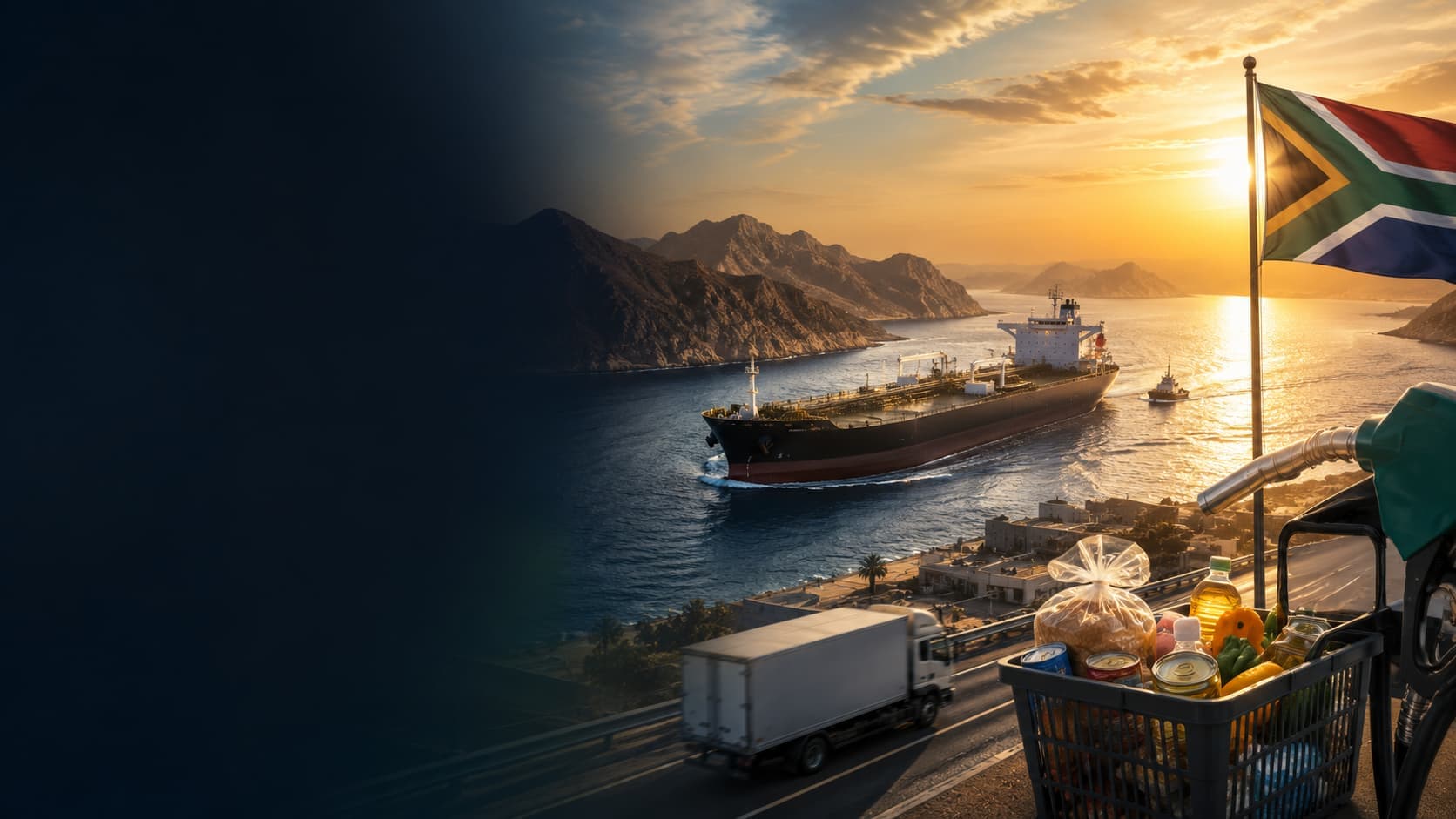
The Strait of Hormuz is thousands of kilometres away from South Africa, yet events there can influence petrol prices, transport costs and even the price of everyday goods. Here's why this narrow stretch of water matters more than most people realise.
☕ Before We Begin...
Have you ever watched the news and heard someone say:
"Tensions are rising in the Strait of Hormuz."
And then the presenter moves on as if everyone already knows what that means.
You're left wondering...
"Should I know where that is?"
"Why are they talking about it?"
"What does it have to do with me sitting here in South Africa?"
You're not alone.
Most of us have heard the name before, but very few of us have ever been told why it matters.
At first glance, it sounds like a place that only shipping companies, politicians or economists need to worry about.
But here's the surprising part...
Something happening in that narrow stretch of water can eventually affect your petrol bill, the groceries you buy, the cost of transporting goods and even the price of running a small business here in South Africa.
So...
Grab a coffee.
Let's figure it out together.
So... What Is the Strait of Hormuz?
Let's start with an unusual word.
Industry Words Made Simple
Strait
A strait is a naturally formed narrow passage of water that connects two much larger bodies of water.
If you've never heard the word before, don't worry.
Think of it like a major highway.
Except instead of cars and trucks travelling on it...
Ships travel through it.
Now imagine there was only one major highway connecting Durban Harbour with the rest of South Africa.
If that road became blocked, thousands of trucks would be delayed.
Food deliveries would slow down.
Fuel deliveries would slow down.
Transport costs would increase.
Eventually, businesses and consumers would feel the impact.
The Strait of Hormuz works in a very similar way—but on a global scale.
Where Is It?
The Strait of Hormuz lies between Oman and Iran.
It connects the Persian Gulf to the Gulf of Oman, which then opens into the Arabian Sea and eventually the Indian Ocean.
It might seem like just another piece of geography on a map.
But it is one of the busiest and most important shipping routes in the world.
Every day, enormous oil tankers carrying crude oil and natural gas travel through this narrow waterway on their way to countries across Asia, Europe and beyond.
☕ Coffee Break
Imagine standing on a bridge overlooking one of the world's busiest roads.
Now replace the cars with giant oil tankers.
That's the Strait of Hormuz.
Although it isn't particularly wide, it carries an extraordinary amount of the world's energy supply every single day.
"Twenty Percent of the World's Oil Passes Through It."
You've probably heard someone say something like:
"About one-fifth of the world's oil passes through the Strait of Hormuz."
That sounds like a huge number.
But what does it actually mean?
It doesn't mean the oil belongs to one country.
It doesn't mean every country buys oil from there.
It simply means that around one out of every five barrels of oil traded by sea travels through this single route.
Think about that for a moment.
Imagine South Africa had only one major road connecting Durban Harbour to the rest of the country.
Now imagine one out of every five trucks carrying fuel, food and supplies had to use that road.
If something blocked it...
Would it affect deliveries?
Absolutely.
Would transport companies become worried?
Definitely.
Would businesses begin preparing for delays?
Of course.
That's exactly why the world pays so much attention to the Strait of Hormuz.
It isn't just about geography.
It's about one of the world's busiest trade routes.
Why Can't Ships Just Go Around?
This is probably the question most people ask.
"If there's trouble there... why don't ships simply use another route?"
It's a fair question.
The answer is...
Because there isn't another route that's nearly as direct or efficient.
Many oil-producing countries around the Persian Gulf rely on the Strait of Hormuz as their main gateway to the rest of the world.
Closing that route doesn't simply inconvenience ships.
It disrupts one of the world's biggest energy supply chains.
When that happens, uncertainty spreads quickly.
And uncertainty has consequences.
So... How Does This Affect South Africa?
At this point, you might be thinking:
"Okay, I understand why the Strait of Hormuz is important... but South Africa doesn't sit next to it. Why should I care?"
That's the right question.
The answer is something called a supply chain.
Industry Words Made Simple
Supply Chain
A supply chain is the journey a product takes before it reaches you.
Imagine a relay race.
One runner passes the baton to the next.
If one runner slows down...
Everyone behind them finishes later.
The global economy works in much the same way.
Oil doesn't magically appear at your local filling station.
It has to be extracted...
Transported...
Loaded onto ships...
Shipped across oceans...
Offloaded...
Refined...
Transported again...
And eventually delivered to petrol stations.
If one important part of that journey slows down...
The entire chain begins to feel the pressure.
But South Africa Produces Some Fuel...
That's true.
South Africa doesn't rely entirely on imported fuel.
However, we are still connected to global energy markets.
We import crude oil and refined petroleum products.
Our businesses buy products transported across the world.
Many of the goods we use every day depend on fuel for manufacturing and transport.
Even products made in South Africa often contain imported components or materials.
That means when the global cost of moving goods changes...
South African businesses often feel it too.
Let's Bring It Closer to Home
Imagine you own a small furniture business in Johannesburg.
You buy wood from one supplier.
The glue comes from another.
The varnish is imported.
Your delivery vehicle needs diesel.
Your supplier's trucks also need diesel.
If global oil prices rise...
Your suppliers may pay more for transport.
Delivery companies may increase their prices.
Shipping costs may rise.
Eventually...
Your costs begin to increase.
You haven't changed anything.
You haven't moved your business.
You haven't hired more staff.
Yet the cost of running your business has quietly gone up.
Not because something happened in Johannesburg...
But because something happened thousands of kilometres away.
Why Do Prices Sometimes Rise Before Anything Has Happened?
Here's where many people get confused.
Sometimes you hear that tensions are increasing in the Strait of Hormuz.
A day later...
Oil prices begin rising.
Yet no ships have stopped.
Nothing has actually happened.
So why?
Industry Words Made Simple
Markets
A market isn't just a place where people buy and sell things.
Financial markets are places where investors make decisions based on what they believe is likely to happen in the future.
Notice that phrase...
"Likely to happen."
Not...
"Already happened."
Imagine your favourite supermarket announces a massive sale starting next week.
Do you wait until next week to change your plans?
Probably not.
You might decide not to buy certain groceries today.
You may already start making a shopping list.
Nothing has happened yet.
But your behaviour has already changed.
Financial markets work in a similar way.
If investors believe there could be disruptions to oil supplies...
Some begin buying oil contracts.
Others become more cautious.
Those decisions affect prices long before a single ship changes course.
That's why you'll often hear people say:
Markets react to expectations.
Why Doesn't South Africa Simply Ignore It?
Because South Africa trades with the world.
We import.
We export.
We manufacture.
We transport goods.
We fly aircraft.
We run buses.
We move food from farms to supermarkets.
Fuel touches almost every part of our economy.
It may not always be the biggest cost...
But it's usually one of the most important.
When fuel becomes more expensive...
Businesses have to decide whether they can absorb those costs...
Or pass some of them on to customers.
Sometimes they absorb them.
Sometimes prices increase.
Sometimes businesses make less profit.
Sometimes they delay expansion.
Every business responds differently.
Why This Matters to You
You don't need to become an economist to understand global trade.
You just need to understand one simple idea.
The world is connected.
Something happening in a narrow stretch of water between two countries you've never visited can eventually affect:
The petrol you buy.
The groceries in your trolley.
The products in your local shop.
The transport costs paid by businesses.
The price of running a small company.
Understanding these connections doesn't make you an expert.
It simply helps you make more sense of the world around you.
☕ Let's Think About It
If one narrow shipping route can quietly influence prices across the world...
How many other events are affecting our daily lives without us even noticing?
Maybe the next headline isn't just another news story.
Maybe it's part of a much bigger picture.
Frequently Asked Questions
What is the Strait of Hormuz?
It is a narrow waterway between Iran and Oman that connects the Persian Gulf to the Gulf of Oman and the Arabian Sea. It is one of the world's most important shipping routes for oil and natural gas.
Why is it important?
A significant portion of the world's seaborne oil trade passes through it every day. Any disruption can affect global energy markets and shipping.
Does South Africa import oil through the Strait of Hormuz?
South Africa's energy supply comes from multiple sources, but global oil prices are interconnected. Disruptions in major shipping routes can influence prices worldwide, including those paid in South Africa.
Why do petrol prices sometimes increase before anything actually happens?
Markets respond to expectations. If traders believe future supplies could be disrupted, prices can begin changing before any physical disruption occurs.
Can a problem in another country really affect my small business?
Yes. Higher transport costs, increased fuel prices and changes in import costs can eventually affect businesses of every size, from large manufacturers to local cafés and small retailers.
Final Thoughts
Most headlines tell us what happened.
Very few explain why it matters.
The next time you hear someone mention the Strait of Hormuz, you'll know it's far more than a name on a map.
It's one of the world's busiest trade routes.
It's a reminder that today's economy is deeply connected.
And sometimes, understanding the journey behind a headline is just as important as knowing the headline itself.
☕ What's Your Next Coffee Question?
Have you ever heard a word, place or topic on the news and thought,
"I know I should understand this... but nobody has ever explained it properly."
Tell us.
It might become our next conversation.
Because at Let's Have Coffee, we're not here to chase headlines.
We chase understanding before the headlines become confusing.
Continue the Conversation
How Can One Person's Words Change Prices Around the World?
Why Do Petrol Prices Rise Even When Oil Prices Fall?
What Is a Tariff, and Why Should You Care?
What Is AGI, and Why Is Everyone Talking About It?
Is Shadow AI Already Working Inside Your Business?

Creative Strategist at Chesly.Tech.