
AI Summary
Most of us believe we make logical decisions. But what if fear quietly influences more of our lives than we realise?
How fear silently controls our decisions
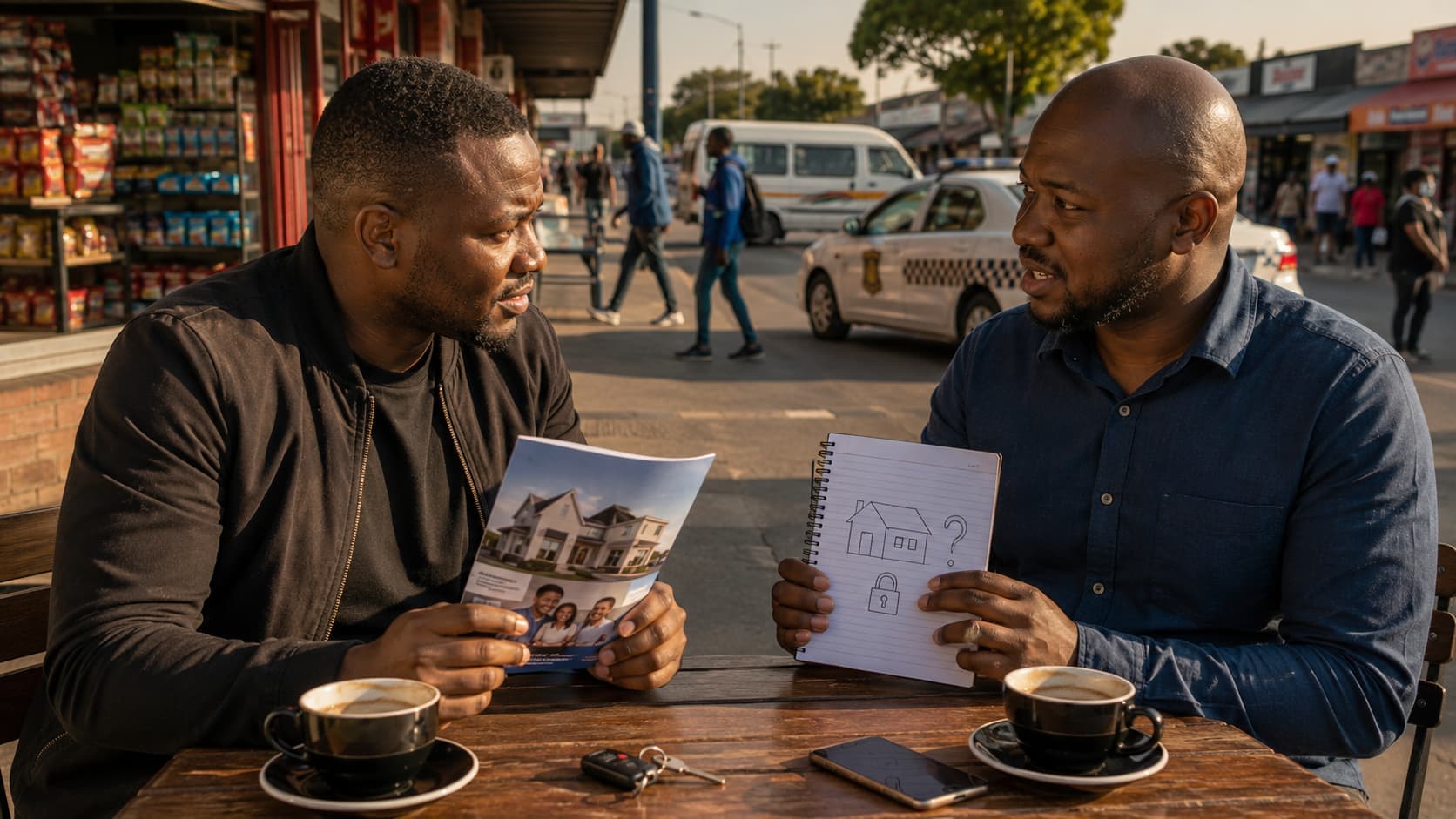
Thabo: "My cousin says I should install an alarm system."
Naledi: "Did someone break into your house?"
Thabo: "No."
Naledi: "Then why now?"
Thabo: "I don't know... everyone says you need one."
They both laughed while waiting for coffee outside a shopping centre in Katlehong.
Then Naledi asked a question that changed the conversation.
"How many of our decisions are actually made because of fear?"
We rarely notice it
Most people don't wake up and say, "Today I'm going to make decisions based on fear."
Instead we say things like:
"I'm just being careful."
"I'd rather be safe than sorry."
"I'm planning for the future."
"You never know what might happen."
Those all sound sensible.
And often they are.
But they all begin with the same idea.
Something might go wrong.
Fear has become a product
Think about how many businesses exist because something might happen.
Insurance companies.
Medical aid.
Vehicle tracking.
Cybersecurity software.
Cloud backups.
Identity protection.
Home security.
None of these products promise that life will go perfectly.
They promise to help if it doesn't.
That's a very different business model.
South Africans understand uncertainty
A spaza shop owner in Thulamahashe worries about stock.
A family in Daveyton worries about electricity during storms.
A business owner in Benoni worries about cybercrime.
A farmer near Tzaneen worries about the weather.
Those worries are real.
Preparing for them isn't weakness.
It's good planning.
The question isn't whether fear exists.
The question is how much control we quietly give it.
Marketing understands human psychology
Imagine two adverts.
The first says:
"Start saving for your future."
The second says:
"What happens to your family if you're no longer here tomorrow?"
Which one gets your attention first?
Our brains naturally notice danger before opportunity.
It's one of the reasons humans survived for thousands of years.
Today, many industries understand that psychology very well.
It's not only businesses
Fear also shapes everyday life.
It influences:
Where we live.
Who we trust.
Which schools we choose.
How much we save.
Whether we start a business.
Whether we change careers.
Whether we invest.
Sometimes fear protects us.
Sometimes it quietly limits us.
The world is selling certainty
No company can promise that nothing bad will ever happen.
What they can promise is support if it does.
That's why today's economy increasingly sells confidence rather than products.
You aren't only buying insurance.
You're buying reassurance.
You aren't only buying cloud storage.
You're buying the confidence that your memories won't disappear.
You aren't only paying for cybersecurity.
You're paying for peace of mind.
Understanding changes everything
The opposite of fear isn't bravery.
It's understanding.
The more we understand investing, the less we fear markets.
The more we understand artificial intelligence, the less we fear technology.
The more we understand money, the better financial decisions we tend to make.
Knowledge doesn't remove uncertainty.
It simply helps us respond to it with confidence instead of panic.
Final thoughts
Fear isn't the enemy.
Without it, we'd probably make many reckless decisions.
But when fear quietly becomes the loudest voice in every decision we make, it's worth asking why.
Perhaps the most valuable question isn't:
"What am I afraid of?"
Perhaps it's:
"Do I understand this well enough to decide without fear making the decision for me?"
That may be one of the most important conversations we'll ever have over coffee.
Related articles
The Day I Realised the Bank Wasn't a Giant Safe (Coming Soon)
Everyone's Talking About Bitcoin. Very Few People Can Explain It.
The Office Was Arguing About Blockchain. Nobody Actually Knew What It Was. (Coming Soon)

Creative Strategist at Chesly.Tech.