
AI Summary
Everyone talks about digital payments, subscriptions and online banking—but what exactly is soft money? And is cash slowly losing its throne?
CFO: "Do you know what soft money is?"
Employee: "Of course."
CFO: "What is it?"
Employee: "Money that's been through a gentle cycle."
CFO: "You're in the wrong meeting."
Everyone laughed.
But after the joke, the room became quiet.
The truth was... nobody around the table could actually explain what soft money meant.
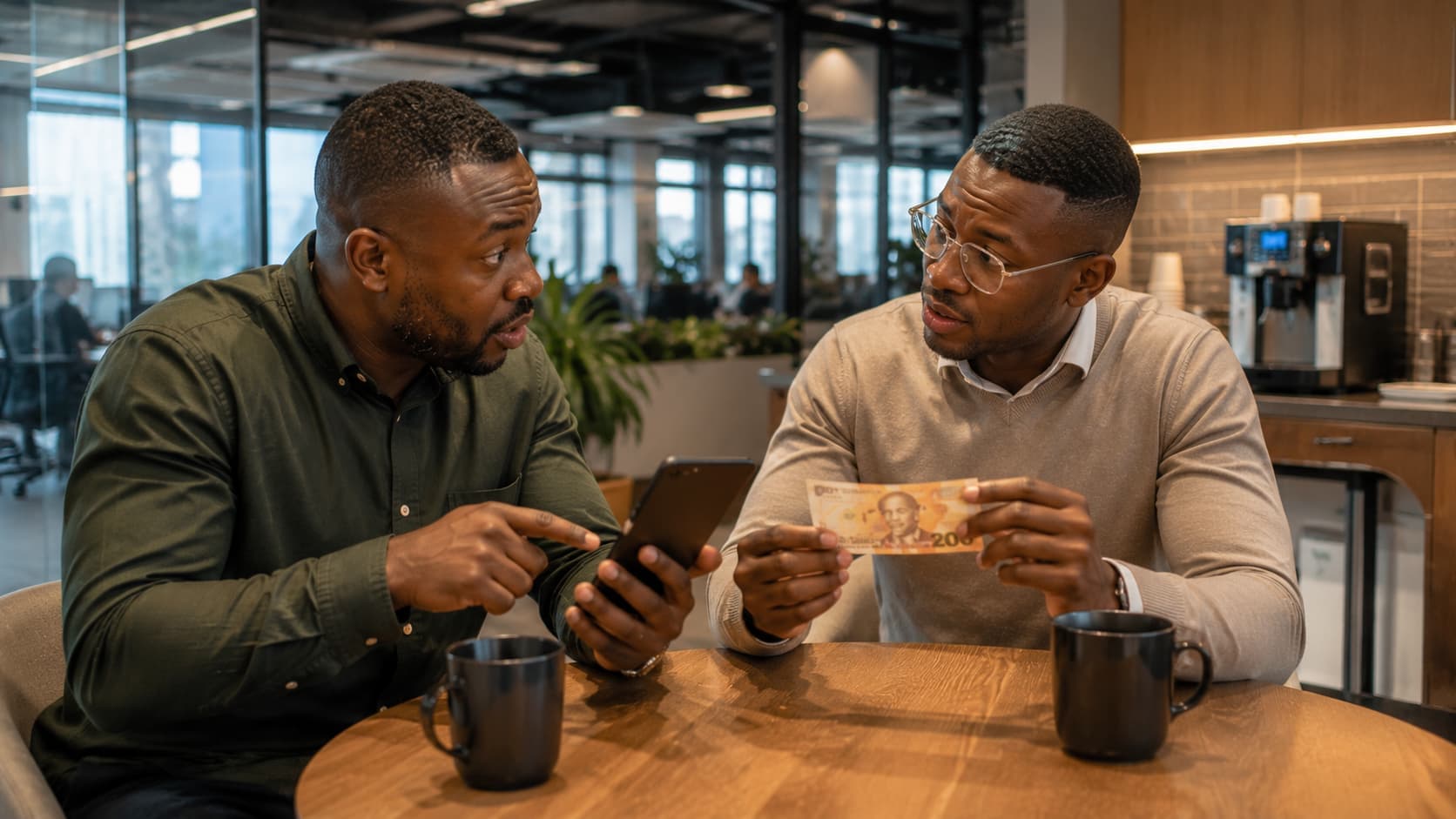
Later that afternoon, Sipho from Germiston and Lerato from Katlehong continued the conversation over coffee.
"I've never even heard the term."
"I've heard people talking about digital money, cashless payments and cryptocurrencies," said Sipho.
"But soft money? That's a new one."
Lerato smiled.
"You've probably been using it every day without realising."
So what is soft money?
Think about the last time you bought something.
You tapped your bank card.
You paid with your phone.
You sent money using your banking app.
You paid with a QR code.
No cash changed hands.
Yet everybody agreed that money had moved.
That is what many people loosely refer to as soft money—money that exists mainly as digital records rather than physical notes and coins.
Your salary arrives electronically.
Your groceries are paid electronically.
Your electricity is bought electronically.
Most of your money never becomes cash.
If it isn't cash, why does everyone trust it?
That's the interesting part.
Whether it's R100 in your wallet or R100 in your banking app, neither has value because of the paper or the numbers on a screen.
It has value because everyone agrees it has value.
Banks, governments, businesses and millions of people trust the system.
That shared trust keeps the economy moving.
So... is cash disappearing?
Not yet.
Walk into many spaza shops in Thulamahashe or visit a taxi rank in Bushbuckridge and you'll still see cash changing hands every day.
But things are changing.
More people now tap cards.
More people scan QR codes.
More salaries arrive electronically.
Many young South Africans rarely visit an ATM unless they absolutely have to.
Where does AI fit into all of this?
Artificial intelligence isn't replacing money.
It's changing how money is managed.
AI is already helping banks detect fraud, approve loans faster, monitor suspicious transactions and answer customer questions.
As AI becomes more capable, it could eventually help governments and financial institutions monitor entire payment systems more efficiently.
Money may stay the same.
The way it's managed may not.
What about cryptocurrencies?
This is where many people get confused.
Bank money and cryptocurrencies are both digital.
But they aren't the same thing.
Your bank balance is backed by the banking system and regulated financial institutions.
Cryptocurrencies work differently, relying on technologies such as blockchain instead of traditional banking infrastructure.
We'll unpack that in another coffee conversation.
Why should ordinary South Africans care?
Because this affects almost everyone.
If you own a business in Soweto...
If you run a spaza shop in Acornhoek...
If you're paying school fees from Mbombela...
If you receive your salary in Johannesburg...
You're already part of a world where most money exists digitally.
The biggest change isn't coming.
It's already here.
Final thoughts
Most people think the future of money starts with Bitcoin.
It doesn't.
It started years ago when our money quietly stopped living in our wallets and started living on screens.
AI, blockchain and digital currencies are simply the next chapters of that story.
The real question isn't whether money is changing.
It's whether we understand the change while it's happening.
Continue the conversation
Everyone's Talking About Bitcoin. Very Few People Can Explain It.
The Office Was Arguing About Blockchain. Nobody Actually Knew What It Was. (Coming Soon)
I Got Caught in a Bitcoin Scam. My Friend Was in a Pyramid Scheme. (Coming Soon)
What Is the Dollar System and Why Does the World Use It? (Coming Soon)
Why Does the World Still Trust the Dollar? (Coming Soon)

Creative Strategist at Chesly.Tech.