
AI Summary
Insurance, trackers, medical aid, cybersecurity and warranties all promise peace of mind. But are we buying products... or protection from uncertainty?
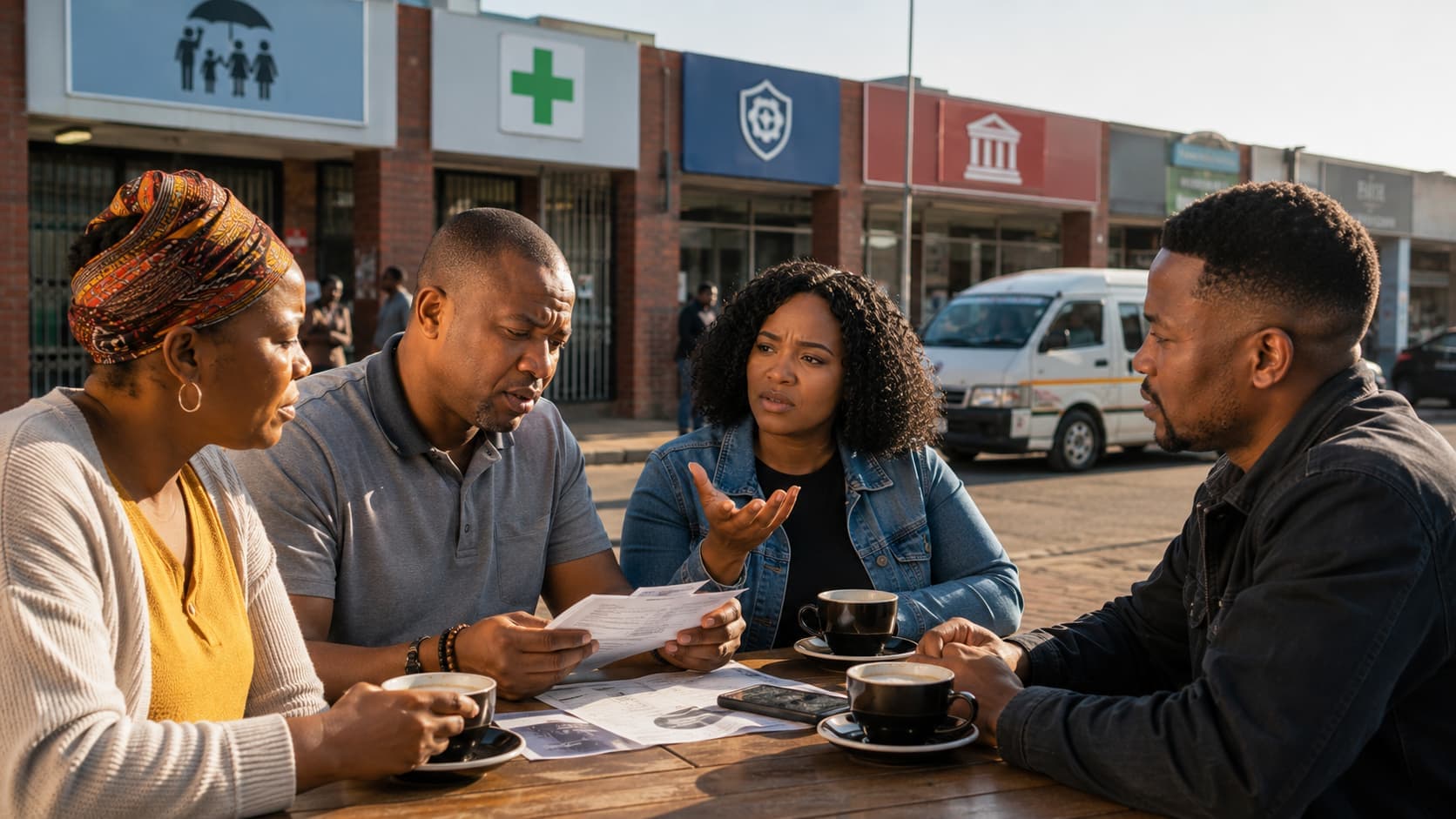
Sibusiso: "My broker says I should increase my life cover."
Lerato: "Mine says I need disability cover as well."
Thabo: "Tracker phoned me yesterday. They say I should upgrade my vehicle's tracking system."
Nomsa: "My medical aid wants me to move to a more comprehensive plan."
The four friends looked at each other while finishing their coffee outside a shopping centre in Daveyton.
After a few seconds, Sibusiso asked a question that nobody had thought about before.
"Has fear become the world's biggest business?"
Think about what we pay for every month
Most of us pay for things we hope we'll never need.
Car insurance.
Life insurance.
Medical aid.
Funeral cover.
Vehicle tracking.
Home alarms.
Cloud backups.
Cybersecurity software.
Extended warranties.
None of these products promise that something good will happen tomorrow.
They promise to help if something goes wrong.
So... what are we really buying?
At first glance, it feels like we're buying insurance.
Or a tracker.
Or medical aid.
But perhaps we're buying something else.
Peace of mind.
The comfort of knowing that if life surprises us, we won't have to face it alone.
That's a very different product.
Fear isn't always a bad thing
Fear tells us to wear a seatbelt.
Fear tells us to lock our doors.
Fear tells us to save for emergencies.
Fear tells a business owner in Benoni to back up company data every night.
Fear tells a spaza shop owner in Thulamahashe to insure stock against theft or fire.
Sometimes fear isn't weakness.
Sometimes it's wisdom.
But fear can also become a business
If people worry about losing something...
Someone will eventually build a business that promises to reduce that worry.
That's not necessarily manipulation.
It's responding to a genuine human need.
Parents buy baby monitors.
Companies buy cybersecurity.
Farmers insure crops.
Homeowners install alarm systems.
The demand exists because uncertainty exists.
The subscription economy loves uncertainty
Many of today's fastest-growing businesses don't wait until something goes wrong.
They charge a monthly fee to stand ready if it does.
That's a fascinating shift.
We're no longer only paying for products.
We're paying for preparedness.
Could a world without fear exist?
Imagine a world where nobody feared illness.
Or theft.
Or accidents.
Would medical aid still exist?
Would insurance?
Would trackers?
Probably not.
But would that world be realistic?
Probably not either.
Maybe we've been looking at it the wrong way
Perhaps fear isn't the product.
Perhaps uncertainty is.
And perhaps the real product being sold is confidence.
The confidence to drive.
To build.
To start a business.
To take a loan.
To raise a family.
Without some way of managing risk, many of those decisions would become much harder.
Final thoughts
Fear has always been part of being human.
What's changed is how we've learned to manage it.
Some companies sell products.
Others sell convenience.
And some sell peace of mind.
The next time you pay for insurance, medical aid or a tracking subscription, ask yourself one simple question.
Am I paying for a service...
...or am I paying to sleep a little better tonight?
There may not be a single right answer.
But it's a conversation worth having over coffee.
Continue the conversation
The Day I Realised the Bank Wasn't a Giant Safe (Coming Soon)
Everyone's Talking About Bitcoin. Very Few People Can Explain It.
The Office Was Arguing About Blockchain. Nobody Actually Knew What It Was. (Coming Soon)

Creative Strategist at Chesly.Tech.