AI Summary
We like to believe we make logical decisions. But what if fear quietly influences far more of our choices than we realise?
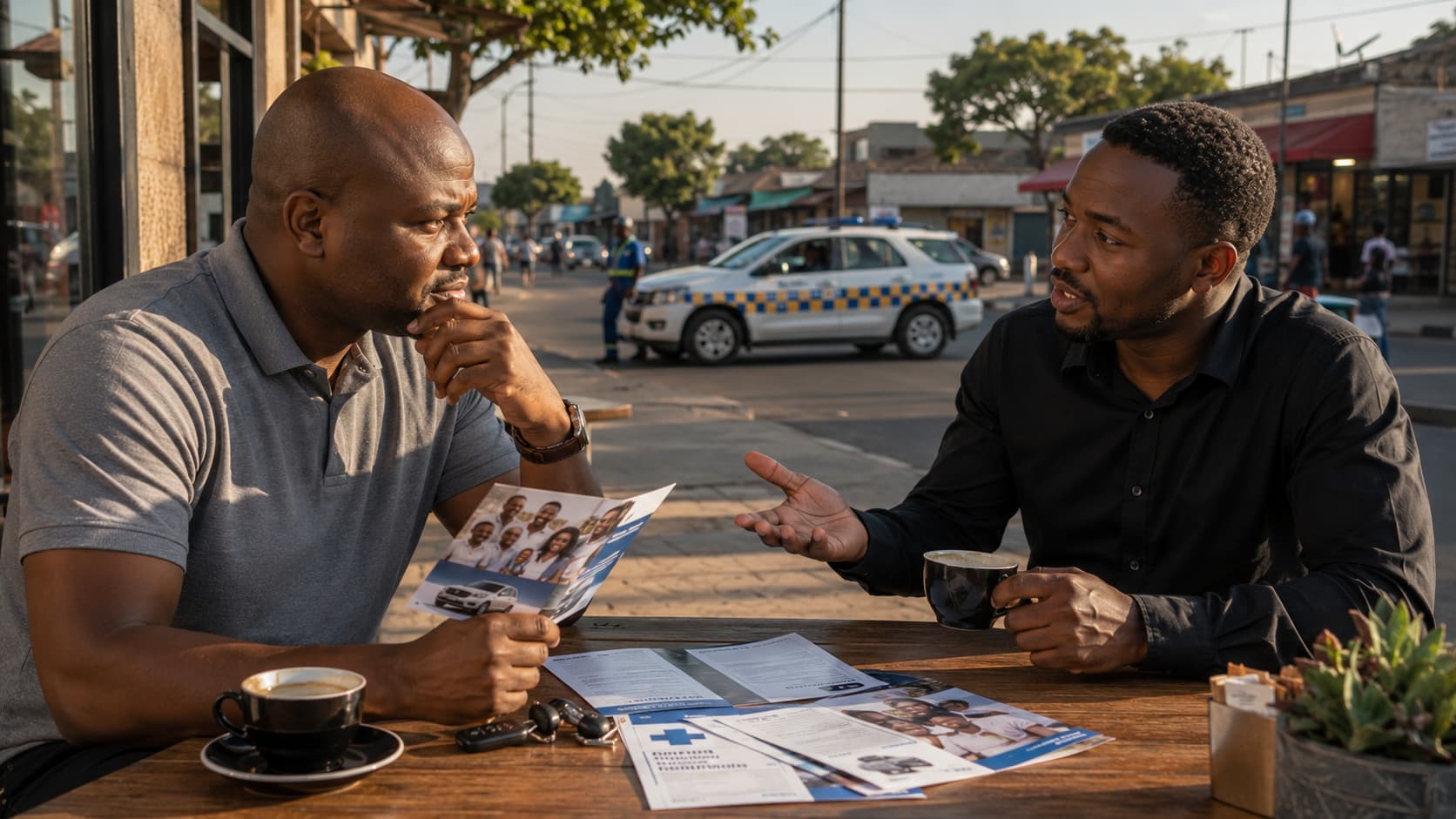
Kagiso: "Why did you buy the bigger medical aid plan?"
Zinhle: "Just in case."
Kagiso: "And why did you install an alarm system?"
Zinhle: "Just in case."
Kagiso: "Why did you buy life insurance?"
Zinhle: "Just in case."
They both laughed while waiting for their coffee outside a café in Benoni.
Then Kagiso asked a question neither of them expected.
"How many of our decisions are actually driven by fear?"
We don't like admitting we're afraid
Most people don't wake up saying, "Today I'm going to make decisions based on fear."
Instead, we say things like:
"I'm just being careful."
"I'm planning ahead."
"I'm protecting my family."
"I'm reducing my risk."
Those are sensible reasons.
But they all have one thing in common.
They're preparing for something we hope never happens.
Fear doesn't always look like fear
Sometimes fear looks responsible.
It reminds us to wear a seatbelt.
It tells us to save for emergencies.
It encourages a business owner in Katlehong to back up customer records.
It convinces a shop owner in Thulamahashe to insure stock before the storm season.
Fear isn't always panic.
Quite often, it's preparation.
But fear can also become expensive
Sometimes we buy things because we genuinely need them.
Other times we buy them because they make us feel safer.
A bigger insurance policy.
A warranty we'll probably never use.
A subscription we forgot we still have.
An upgrade that promises "complete protection."
None of these purchases are automatically wrong.
But they're worth thinking about.
The world has become very good at selling certainty
Modern life is full of uncertainty.
No company can promise your car will never be stolen.
No doctor can promise you'll never become ill.
No cybersecurity company can promise you'll never be hacked.
But many businesses promise they'll help if those things happen.
That's valuable.
It's also why reassurance has become one of the world's most powerful products.
Sometimes fear protects us
If nobody feared house fires...
Smoke detectors wouldn't exist.
If nobody feared losing data...
Cloud backups wouldn't exist.
If nobody feared accidents...
Seatbelts wouldn't exist.
Fear has helped create products that genuinely improve lives.
The challenge is knowing when fear is helping us...
...and when it's quietly making every decision for us.
Maybe confidence is the real goal
The opposite of fear isn't recklessness.
It's understanding.
The more we understand money...
The less we fear investing.
The more we understand technology...
The less we fear artificial intelligence.
The more we understand risk...
The better decisions we tend to make.
Knowledge doesn't remove uncertainty.
But it helps us respond to it more confidently.
Final thoughts
Fear has always been part of life.
Sometimes it keeps us alive.
Sometimes it helps us plan.
Sometimes it encourages us to prepare for tomorrow.
The question isn't whether fear is good or bad.
The question is whether we're making decisions because we understand the risks...
...or simply because we're afraid of them.
That's a conversation worth having over coffee.
Continue the conversation
The Day I Realised Insurance Wasn't Selling Insurance (Coming Soon)
The Day I Realised the Bank Wasn't a Giant Safe (Coming Soon)

Creative Strategist at Chesly.Tech.