
AI Summary
Medicine is beginning to detect some illnesses long before symptoms appear. Here's what every parent should understand about genetic screening.
Imagine hearing those words.
Not after your child is born.
Not after the first birthday.
Months before you've even held your baby.
For many families around the world, that conversation is no longer science fiction.
It's modern medicine.
And it begins with understanding something called genetic screening.
Let's start with another medical word
Genetic screening.
It sounds complicated.
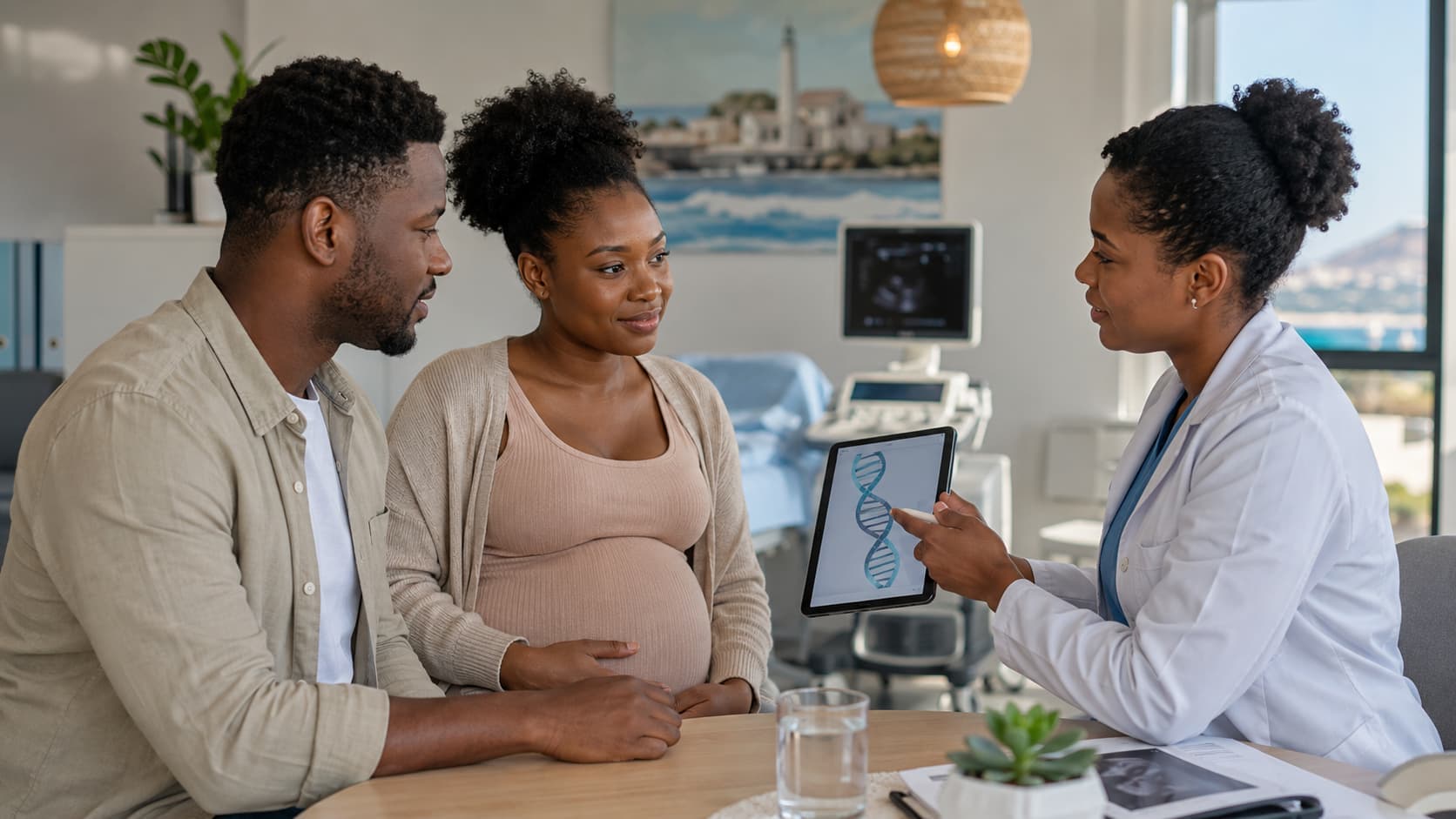
It's actually a way of looking for certain inherited conditions before symptoms appear.
Doctors don't read your future.
They study information carried inside your DNA.
Sometimes that information can reveal whether a baby has inherited certain genetic conditions.
Sometimes everything looks completely normal.
Sometimes it tells doctors they need to prepare.
Knowing isn't the same as treating
This is where many people become confused.
Finding a condition doesn't automatically mean doctors can fix it.
Sometimes they can only prepare.
Sometimes they can begin treatment immediately after birth.
Sometimes researchers are exploring whether future therapies could correct certain genetic problems much earlier.
That's why scientists around the world are investing heavily in biotechnology.
Why pharmaceutical companies are watching closely
For decades, medicine focused on treating people after they became ill.
Today, healthcare is slowly moving towards prediction and prevention.
The earlier doctors understand a disease, the more treatment options may become available.
That's changing how pharmaceutical companies invest.
It's changing hospitals.
It's changing medical research.
And it's changing healthcare businesses around the world.
This conversation belongs in South Africa too
Whether you live in Mthatha, Mbombela, Mahikeng or Bellville, these technologies are becoming part of modern healthcare.
South African specialists already use genetic testing for certain inherited conditions.
As technology improves, more families may hear new medical terms they've never heard before.
Understanding those terms helps people ask better questions.
Another word you'll hear
Inherited condition.
Some illnesses aren't caused by something you caught.
They're passed from one generation to another through genes.
Not every child inherits them.
Not every inherited condition becomes serious.
But understanding family history is becoming an increasingly important part of modern healthcare.
The biggest change isn't the technology
The biggest change is timing.
Medicine is slowly moving from reacting...
...to preparing.
Doctors are learning more before symptoms appear.
Researchers are studying diseases earlier than ever before.
Families are having conversations previous generations never needed to have.
Final thoughts
For most of history, medicine waited for illness to appear.
Today, it is beginning to look much earlier.
Genetic screening won't answer every question.
It won't prevent every disease.
But it is changing one of the oldest assumptions in healthcare.
Sometimes the most important medical conversation begins long before the first symptom.
And that's a conversation worth having over coffee.
Related articles
How Fear Silently Controls Our Decisions (Coming Soon)
The Office Was Arguing About Blockchain. Nobody Actually Knew What It Was. (Coming Soon)
Everyone's Talking About Bitcoin. Very Few People Can Explain It.

Creative Strategist at Chesly.Tech.