
AI Summary
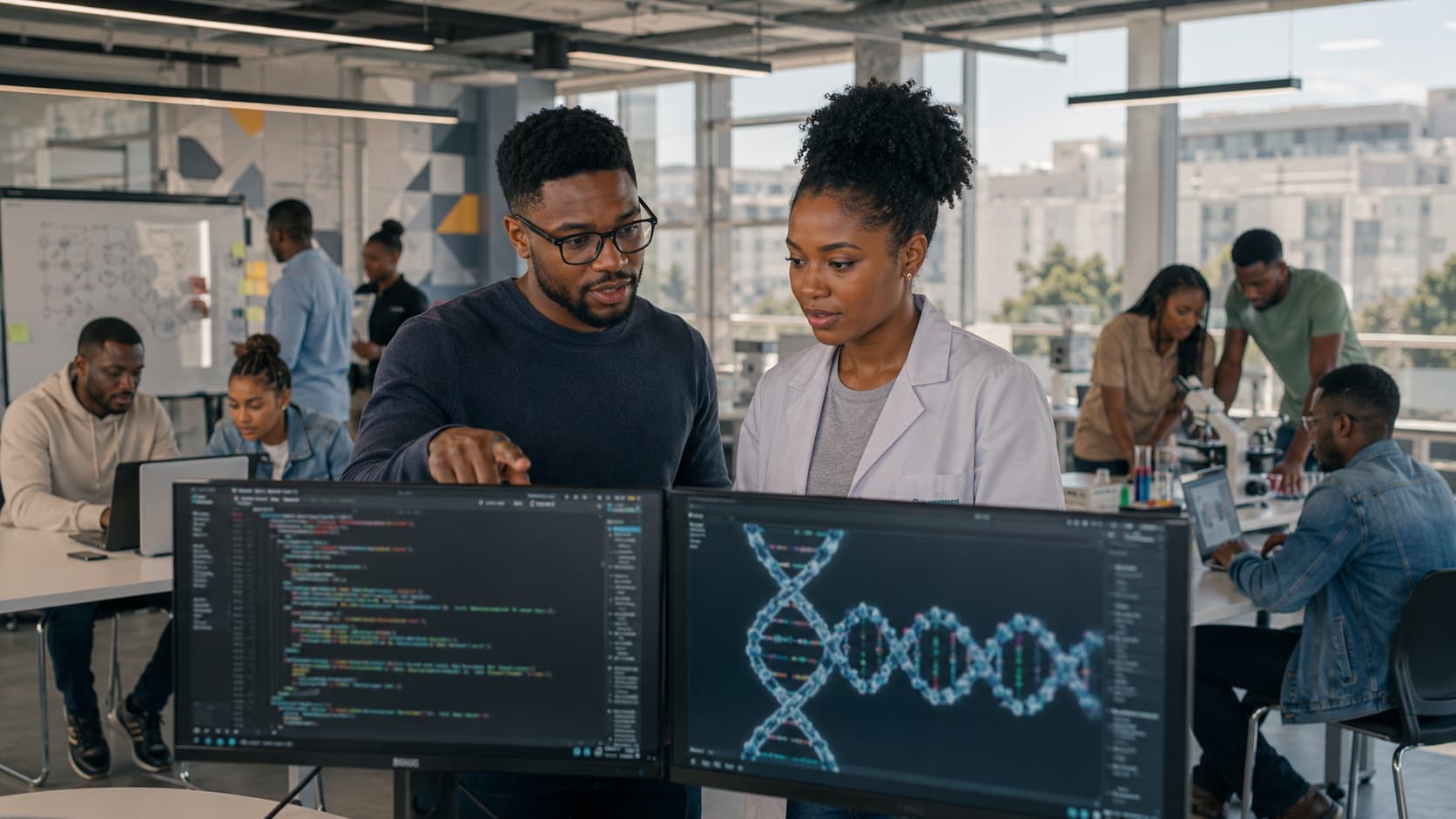
For years programmers have fixed software bugs. Scientists are beginning to fix biological ones. The comparison isn't as crazy as it sounds.
For decades, software engineers have searched for bugs.
A missing semicolon.
A broken function.
A line of code that behaves differently from what was intended.
Fix the bug...
The software works.
Now imagine someone telling you that scientists are beginning to do something remarkably similar.
Not to software.
To us.
Let's borrow a word from software development
Debugging.
Every software developer knows the word.
It simply means finding a mistake and correcting it.
Sometimes the problem is one line.
Sometimes it's one missing character.
Tiny mistake.
Huge consequences.
Biology is beginning to look surprisingly familiar.
Your body also runs on instructions
Not computer code.
DNA.
DNA is often called the blueprint of life.
You can also think of it as an instruction manual.
Inside that manual are thousands of individual instructions called genes.
Every cell in your body reads those instructions every single day.
Most of the time...
Everything works exactly as it should.
But sometimes instructions contain mistakes
Scientists call some of those mistakes mutations.
A mutation is simply a change in DNA.
Some changes have no effect.
Some are beneficial.
Others can lead to inherited diseases.
The fascinating part is what researchers are now trying to do next.
Can biology be edited?
That's where another industry word appears.
Genome editing.
Researchers have developed tools that allow them to make extremely precise changes to DNA.
One of the best known is called CRISPR.
Many scientists compare it to editing a document.
Locate the mistake.
Correct it.
Save the new version.
Real biology is, of course, far more complex than software.
But the comparison helps us understand why this technology has attracted so much attention.
Technology companies are paying attention too
This isn't only changing healthcare.
It's bringing together industries that rarely worked side by side.
Software engineers.
Artificial intelligence specialists.
Data scientists.
Medical researchers.
Biologists.
Pharmaceutical companies.
All of them are beginning to solve problems together.
That's one reason biotechnology has become one of the fastest-growing industries in the world.
South Africa won't be left behind
Students studying computer science in Pretoria.
Medical researchers in Cape Town.
Biotechnology students in Bloemfontein.
Universities across South Africa are preparing graduates for careers that barely existed a generation ago.
The future isn't only about doctors.
It may also be about programmers working alongside them.
The language is changing
Words like algorithm, genome, machine learning and gene editing are starting to appear in the same conversations.
Ten years ago that sounded unusual.
Today it's becoming normal.
Tomorrow it may simply be how modern healthcare works.
Final thoughts
Human beings aren't software.
DNA isn't computer code.
But the comparison teaches us something important.
Both rely on instructions.
Both can contain mistakes.
Both require extraordinary care when someone attempts to correct them.
The future may not belong to one profession.
It may belong to people who understand both biology and technology.
That's a conversation worth having over coffee.
Related articles
The Doctor Said, "We Found the Problem Before Your Baby Was Born."
The Office Was Arguing About Blockchain. Nobody Actually Knew What It Was. (Coming Soon)
Everyone's Talking About Bitcoin. Very Few People Can Explain It.

Creative Strategist at Chesly.Tech.