How to Spot a Fake Government Purchase Order (PO) in South Africa
Receiving what appears to be a government purchase order can be exciting for any business. It may look like you've secured a valuable contract, but scammers increasingly use fake purchase orders to trick businesses into supplying goods or revealing sensitive information.
Many businesses only discover the fraud after delivering products or paying unnecessary "processing fees." Knowing how to verify a purchase order before taking action can save your business from significant financial loss.
What Is a Government Purchase Order?
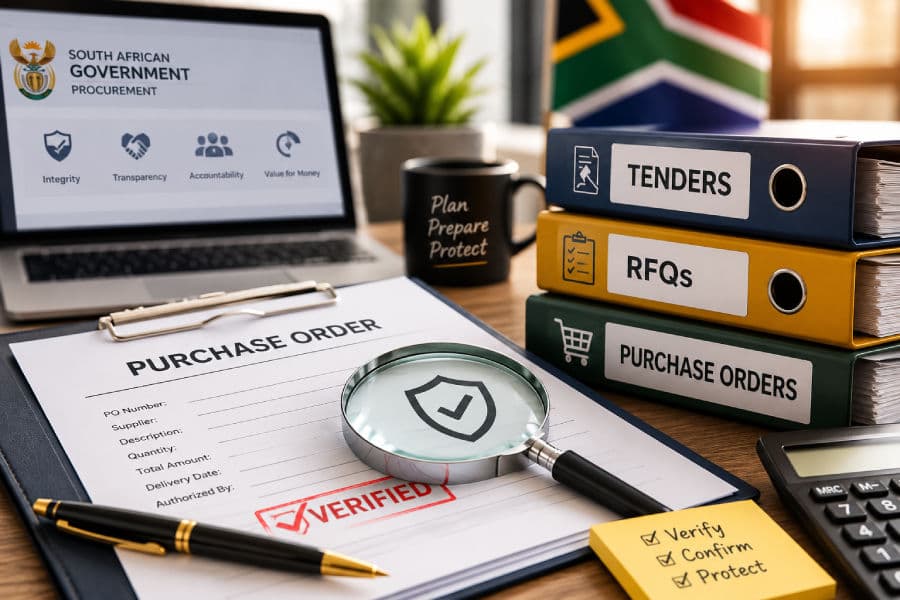
A Purchase Order (PO) is an official document issued after a quotation or tender has been approved. It authorises a supplier to provide specific goods or services and forms part of the procurement process.
A legitimate purchase order typically includes:
- Purchase Order number
- Department or entity name
- Supplier information
- Description of goods or services
- Quantities
- Agreed pricing
- Delivery instructions
- Authorised procurement official
Why Fake Purchase Orders Are Common
Fraudsters use fake purchase orders to:
- Obtain goods without paying.
- Steal company information.
- Convince businesses to pay fake administration fees.
- Impersonate government departments.
- Exploit businesses unfamiliar with government procurement.
Small and medium-sized businesses are often targeted because they are eager to secure government work.
8 Warning Signs of a Fake Purchase Order
1. The Purchase Order Arrives Unexpectedly
If you've never submitted a quotation or tender to the organisation, receiving a purchase order should immediately raise questions.
2. The Email Address Looks Suspicious
Government procurement officials generally use official email addresses ending in domains such as:
.gov.za.treasury.gov.za.transnet.net
Be cautious of Gmail, Yahoo, Outlook or other free email services claiming to represent government.
3. You're Asked to Pay Before Delivery
Legitimate government departments do not require suppliers to pay:
- Registration fees
- Processing fees
- Clearance fees
- Supplier activation fees
Requests for payment are one of the strongest indicators of fraud.
4. Banking Details Don't Match
Always verify banking information independently. Never rely solely on details included in an email.
5. The Purchase Order Contains Errors
Look for:
- Poor spelling
- Incorrect logos
- Missing contact details
- Formatting inconsistencies
- Missing procurement references
Official purchase orders are usually professionally prepared.
6. Unrealistic Delivery Deadlines
Scammers often pressure businesses to deliver immediately.
Government procurement normally follows documented processes with realistic delivery schedules.
7. The Contact Person Cannot Be Verified
Search for the official on the department's website or contact the organisation directly using publicly listed numbers.
8. The Order Seems Too Good to Be True
Large orders from organisations you've never dealt with should always be verified before proceeding.
How to Verify a Government Purchase Order
Before accepting any purchase order:
- Confirm the organisation issued it.
- Verify the procurement official.
- Call the department using official contact details.
- Match the purchase order number.
- Confirm the quoted goods and pricing.
- Verify delivery addresses.
Never rely solely on email communication.
What To Do If You Receive a Fake Purchase Order
If you suspect fraud:
- Stop all communication.
- Do not deliver any goods.
- Do not pay any requested fees.
- Report the incident to the organisation being impersonated.
- Inform SAPS if financial loss has occurred.
- Warn your staff about similar scams.
Common Mistakes Businesses Make
Businesses often become victims because they:
- Assume every official-looking document is genuine.
- Fail to verify procurement officials.
- Rush deliveries.
- Ignore inconsistencies.
- Pay fake administrative charges.
Taking time to verify every purchase order is far cheaper than recovering from fraud.
Frequently Asked Questions
Does government pay suppliers before delivery?
No. Government procurement follows formal payment processes after goods or services have been delivered according to contract terms.
Can a government department ask me to pay activation fees?
No. Legitimate government entities do not charge suppliers activation or processing fees.
What should I do if I have already supplied goods?
Immediately contact the department concerned, report the matter to SAPS, and gather all communication as evidence.
Continue Reading
Building a successful South African business takes more than finding tenders. These step-by-step guides will help you register correctly, avoid common mistakes, and prepare your business for government opportunities.
-
👉 Step-by-Step Guide to Registering on the Central Supplier Database (CSD)
-
👉 How to Spot a Fake Government RFQ and Protect Your Business
Final Thoughts
Government procurement presents excellent opportunities for South African businesses, but criminals increasingly exploit suppliers through fake purchase orders.
Always verify every purchase order independently before delivering goods, sharing sensitive information or making payments. A few minutes of verification could prevent substantial financial losses and protect your business from procurement fraud.

Creative Strategist at Chesly.Tech.