
Are you actually ready to apply for business funding?
Answer a practical set of questions about your business, finances, documents and funding case. Get a readiness score and a prioritised list of what to fix before you approach a funder.
This is not an eligibility or approval checker.
It measures how well prepared your funding case is. Always confirm the current criteria and document checklist with the specific funder or programme before applying.
Funding readiness
0 of 13 checks completed
Business foundation
Business registration and ownership records are current.
Formal programmes commonly ask for entity and ownership evidence. Requirements differ for sole proprietors, companies and co-operatives.
You have an active business bank account and recent statements.
High impactBanking evidence is commonly used for verification, financial assessment and disbursement.
Compliance
Your SARS registration and tax status are in order.
High impactTax compliance is a recurring requirement across formal public funding programmes.
You have the licences, permits and sector registrations that apply to your business.
The requirement depends on your activity and location. Do not assume every business needs the same licence.
If you employ people, your relevant employer registrations and records are in order.
Some programmes request UIF or other labour-compliance evidence.
Financial readiness
You can show reliable recent sales, expense and cash-flow records.
High impactFunders need evidence that the business is economically active and that the funding request is viable.
You have the financial statements, management accounts or projections appropriate to your stage.
The exact period and document type varies by programme and whether the business is established or a start-up.
Funding case
You know exactly how much funding you need and what the money will pay for.
High impactA costed use-of-funds plan is stronger than a general request for money to grow.
You can support the amount with quotations, supplier prices, a purchase order or other credible evidence.
Supporting evidence makes the requested amount defendable and is explicitly required by some programmes.
If the funding includes a loan, your cash flow can show how repayments would be made.
High impactLoan funding is normally assessed for viability and repayment capacity. Pure grant programmes may use different tests.
Commercial readiness
You can show credible demand for what the business sells.
Orders, contracts, invoices, repeat customers or a realistic route to market help prove the business case.
You can show that you or your team can deliver the plan the funding will support.
Experience, supplier arrangements, operating history and delivery capability reduce execution risk.
Application readiness
Your core application documents are organised and tell the same story.
Names, ownership, banking, tax, financial records and supporting evidence should be consistent.
What funders are trying to understand
Across formal South African funding programmes, the paperwork changes but the underlying questions are familiar: Is the business legitimate and compliant? Is there a viable market? Are the numbers credible? Is the amount requested supported by evidence? Can the business deliver the plan and, for debt funding, service the finance?
That is why this assessment scores preparation rather than pretending that one checklist can determine approval across every programme.
Applying for a specific programme?
Use this score to find gaps first, then check the funder's current official application page. Programme rules, funding windows, limits and required documents can change.
Frequently asked questions
Does a high score mean my funding will be approved?
No. The score measures preparation, not approval probability. Each funder applies its own eligibility criteria, due diligence, affordability tests and programme rules.
Is this assessment only for government funding?
No. It focuses on evidence that is useful across many formal funding applications, while recognising that government programmes, development finance institutions, banks and private funders can have different requirements.
What documents do South African business funders commonly request?
Requirements vary, but formal programmes commonly ask for business and ownership records, tax and banking evidence, financial information or projections, a clear breakdown of the funding requirement and supporting quotations or contracts where relevant.
What if a question does not apply to my business?
Where the assessment offers a Not Applicable option, that check is removed from the scoring denominator so it does not unfairly reduce your score.
Is my information stored?
No. This assessment runs in your browser and does not ask for your name, ID number, bank details or funding documents.
From the Business Tools
View All →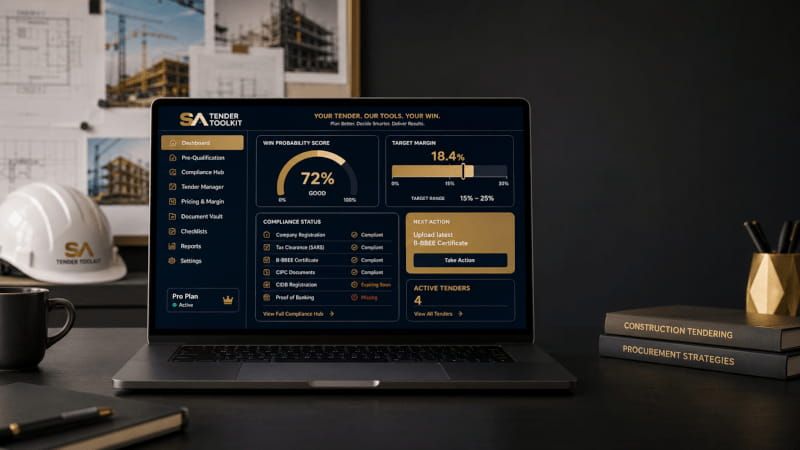
South African Tender Toolkit
A dashboard-first Excel toolkit that takes you from a tender advert to a defensible decision in about twenty minutes — across nine linked tabs covering Bid Scoring, Pricing, Compliance, Submission and a printable Decision Record. Twelve weighted criteria produce a Bid Score out of 100 with a clear recommendation, a full costing model shows the margin the tender price actually leaves you, and five automatic conflict checks fire when two tabs disagree — so you find out a contract is unprofitable before you spend three weeks winning it.
Premium — R750
🛒 Add to Cart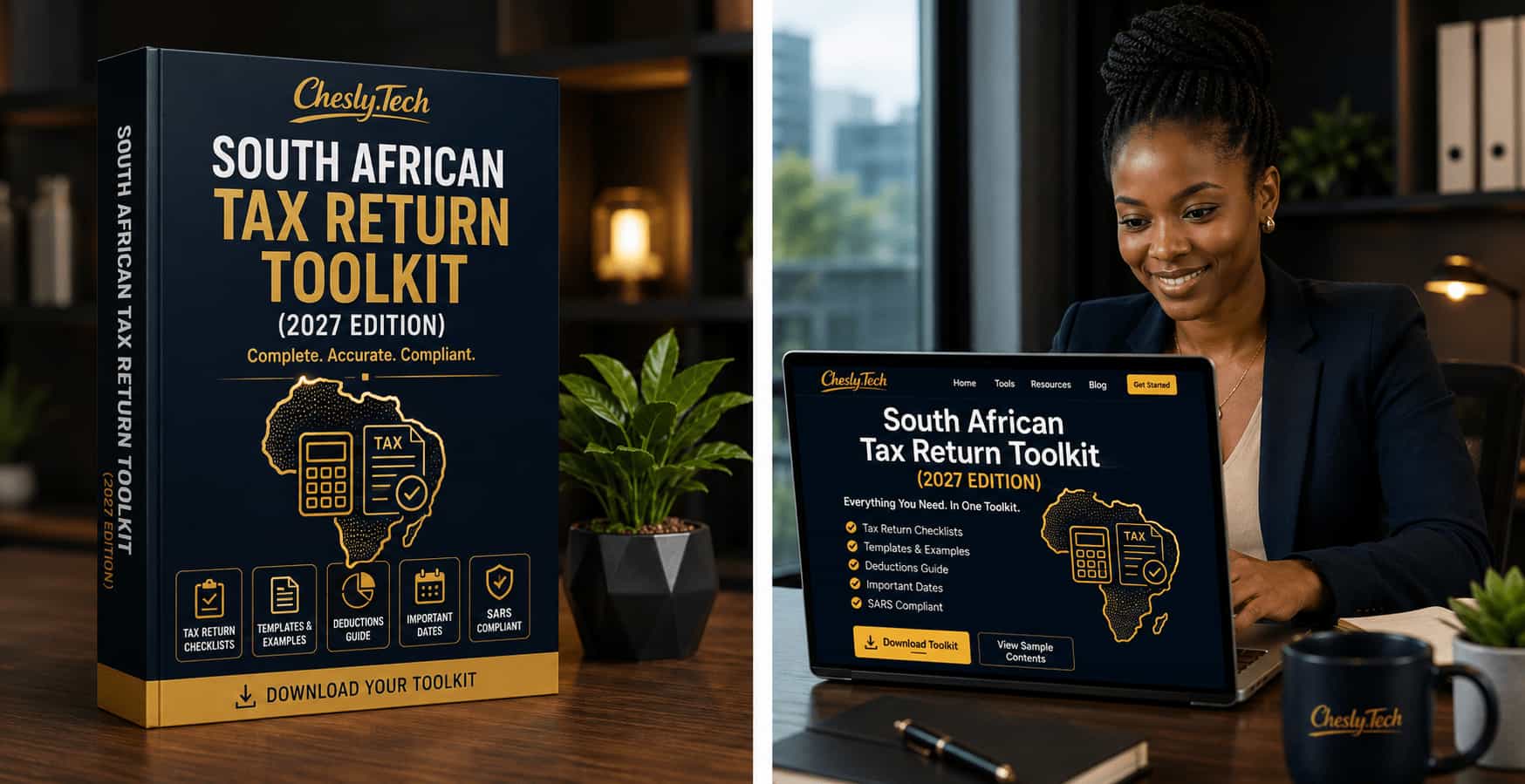
South African Tax Return Toolkit (2027 Edition)
A dashboard-first Excel toolkit that walks you from a blank return to a submit-ready SARS filing in 5 guided steps — Your Profile, Document Checklist, Income & Deductions, Tax Calculation, and Ready to Submit. Built on the actual 2026/2027 SARS tax tables, it shows your Tax Readiness Score, your estimated refund or amount owing, and a Decision Coach explaining what each entry means and what to double-check — so nothing is left to guesswork before you file.
Premium — R750
🛒 Add to Cart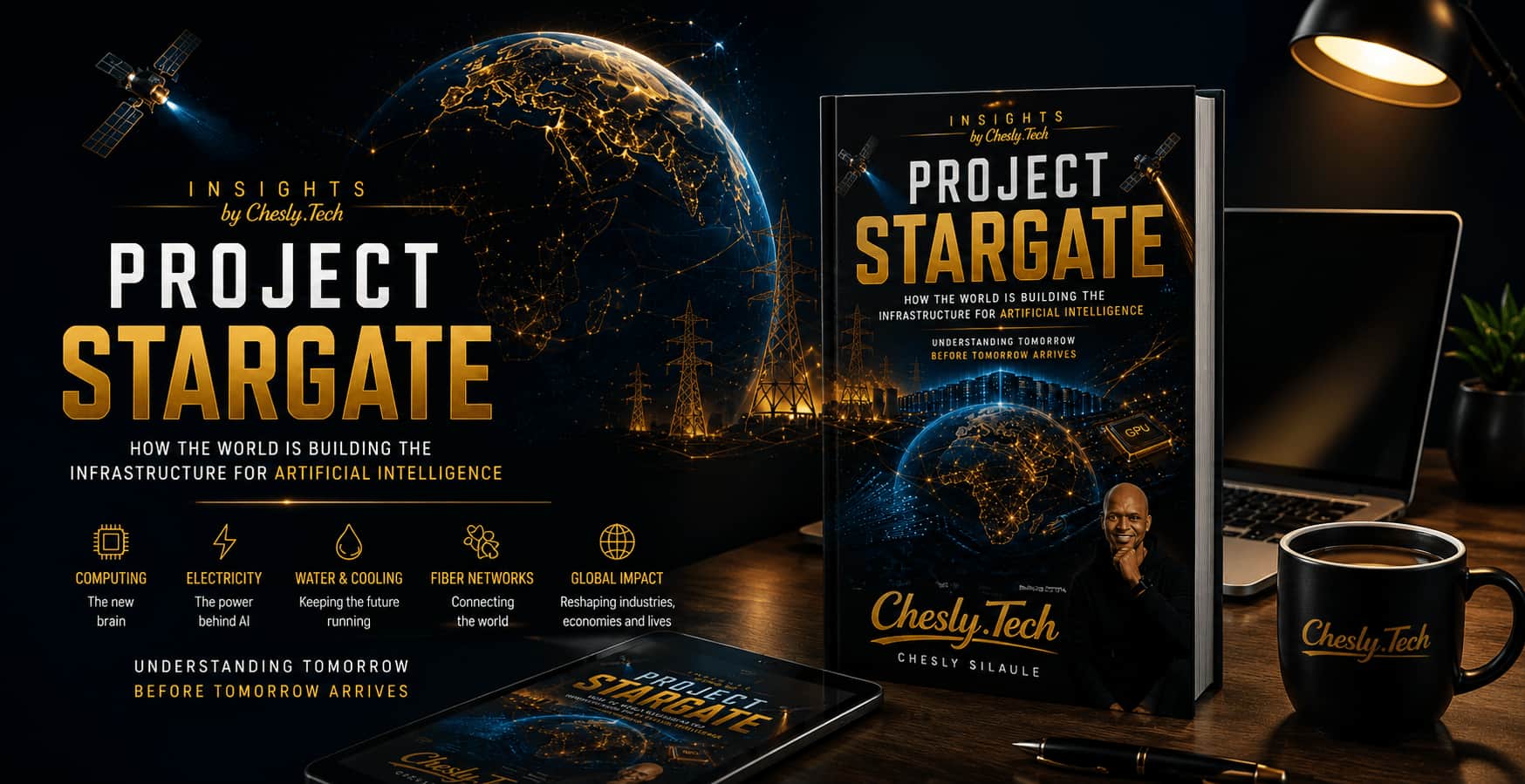
Project Stargate: Understanding AI Billion $ Infrastructure
Project Stargate is a plain-English guide to one of the biggest AI infrastructure projects ever announced. The book follows the money, chips, power, data centres and construction behind the Stargate buildout, explaining who is involved, how the financing works, why electricity may be the real bottleneck, and what the project could mean for jobs, businesses and Africa. It also separates established facts from forecasts and open questions, helping readers understand what is happening now without treating uncertain predictions as certainty.
Free
Get for Free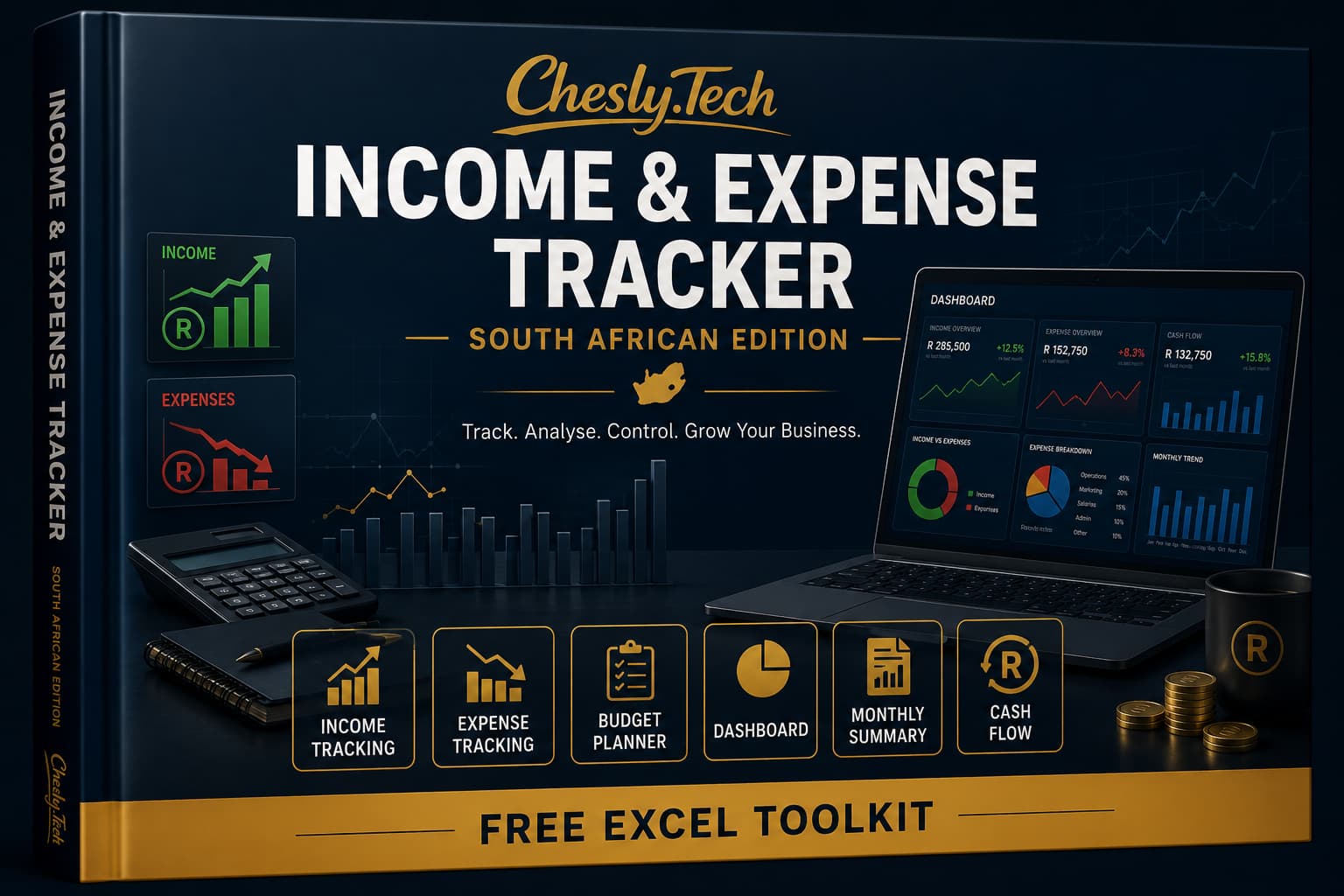
Income & Expense Tracker – South African Edition
A practical Excel income and expense tracker for South African small businesses. Record money coming in and going out, organise transactions, monitor cash flow and build a clearer view of business performance from one reusable workbook.
Premium — R250
🛒 Add to Cart