
AI Summary
From Daveyton Mall in the 1990s to the new Etwatwa Crossing, township shopping centres are transforming where South Africans shop, work and invest. But is this the future of township economies—or the end of traditional local businesses?
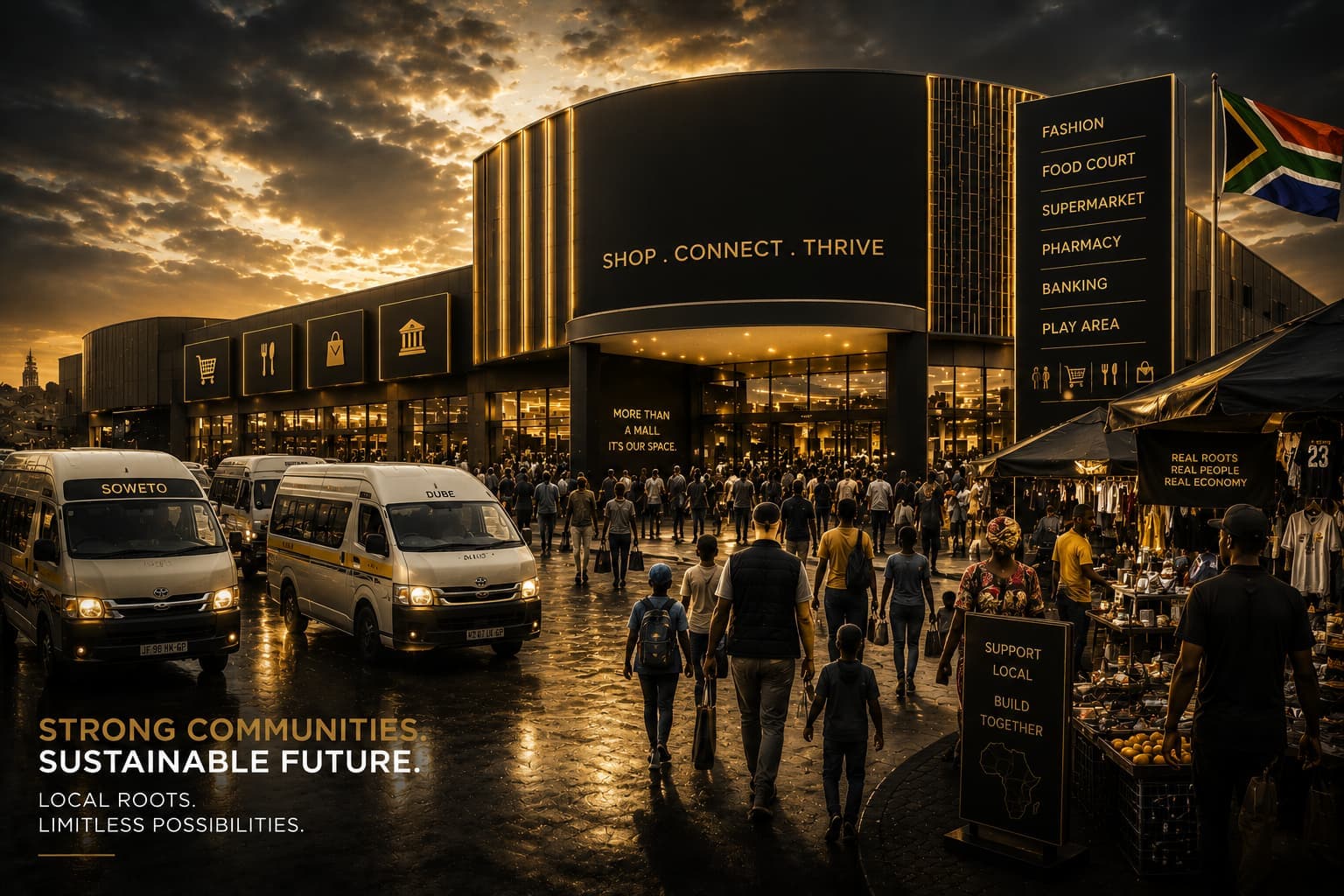
Drive through many South African townships today and you'll notice something that would have been almost unimaginable 30 years ago: modern shopping malls, national retailers, bank branches, coffee shops and fast-food chains. What was once considered something people travelled into town for is now arriving in the townships themselves.
The latest example is Etwatwa Crossing, a new shopping centre opening in Etwatwa, east of Benoni. Anchored by Shoprite, Boxer and Cashbuild, the development is expected to serve around 80,000 households and create employment opportunities for the local community.
It raises an interesting question:
Are shopping malls taking over South African townships?
This Didn't Start Yesterday
Many people assume township malls are a recent trend, but they're not. One of South Africa's earliest township malls was Daveyton Mall, which opened in 1993. At the time, it was considered groundbreaking because it brought major national retailers directly into a township instead of forcing residents to travel to Benoni or Johannesburg for everyday shopping.
Since then, township retail has grown rapidly. Developers realised something many had overlooked:
Townships have large populations.
Consumers already spend billions of rand every year.
Most of that spending was leaving the community.
The obvious solution? Build the shops where the customers already live.
The Rise of Township Retail
Over the past two decades, township malls have appeared across South Africa, including:
Maponya Mall (Soweto)
Jabulani Mall (Soweto)
Daveyton Mall
Mayfield Square
Soshanguve Crossing
KwaMashu Shopping Centre
Mamelodi Mall
Etwatwa Crossing
Each development follows a similar strategy:
Locate near taxi ranks.
Provide grocery anchors like Shoprite or Boxer.
Add fashion retailers.
Include banks and ATMs.
Create restaurants and fast-food outlets.
Offer healthcare services such as pharmacies.
The goal isn't simply convenience — it's to keep consumer spending inside the local economy.
Why Developers Love Township Malls
Township retail has become one of South Africa's strongest retail property sectors. Why?
| Reason | Why It Matters |
|---|---|
| Large population | Thousands of customers live within walking distance. |
| Established transport hubs | Taxi routes naturally create foot traffic. |
| Underserved markets | Many communities previously lacked formal retail options. |
| Everyday shopping | Food, clothing and essentials remain resilient even during economic downturns. |
Etwatwa Crossing is a good example. Developers estimate the centre will serve roughly 80,000 households and include many of South Africa's best-known retailers.
It's About More Than Shopping
Modern township malls aren't just places to buy groceries — they're becoming community hubs. Inside one shopping centre you can often find:
Clinics
Banks
Government service points
Cellphone stores
Restaurants
Employment opportunities
Community events
For many residents, a trip to the mall replaces several trips across different parts of the city.
But There's Another Side to the Story
Every new mall creates winners, but it also creates challenges. Small independent retailers often struggle when national chains move into the neighbourhood — the local clothing shop now competes with Mr Price, the family-owned grocery store competes with Shoprite, and the independent takeaway competes with Hungry Lion or KFC.
This doesn't mean township malls are bad. It means local businesses need to compete differently—through service, specialised products or niche markets.
Key Takeaway
The biggest competition facing township businesses isn't necessarily another local business anymore. It's national retail brands arriving closer to their customers.
What Etwatwa Crossing Represents
Etwatwa Crossing isn't simply another shopping centre — it represents confidence. Property developers don't invest hundreds of millions of rand unless they believe a community has long-term economic potential. The project also demonstrates how township retail continues expanding into areas that were historically underserved.
What Happens Next?
The future of township retail is unlikely to be about building the biggest mall. Instead, developers are focusing on creating mixed-use community spaces that combine shopping, services, employment and local entrepreneurship. Some centres are even introducing dedicated spaces for local small businesses instead of relying entirely on national retailers.
💡 Chesly Insight
Township malls tell an important story about South Africa's economy. They show that investment increasingly follows people rather than city centres. The question is no longer whether townships can support major retail developments. The question is how local entrepreneurs can grow alongside them instead of being left behind.
🇿🇦 South African Perspective
If you live in Daveyton, Etwatwa, Soweto, Mamelodi or KwaMashu, you've probably witnessed this transformation firsthand. A generation ago, many families travelled into nearby cities for banking, shopping and entertainment. Today, many of those services are available much closer to home. That's changing traffic patterns, creating jobs and reshaping township economies in ways that will influence South African retail for decades.

Creative Strategist at Chesly.Tech.